You are amazing!!!
Sunday, May 10, 2020
HAPPY MOTHER'S DAY
I wish every mother, mother's to be and fathers who have had to be the mother to their children a happy mother's day.

Monday, April 27, 2020
IMPOSTOR SYNDROME
I was surfing the internet yesterday and I came across a topic that I would love to share. It is called Impostor Syndrome.
What is Impostor Syndrome?
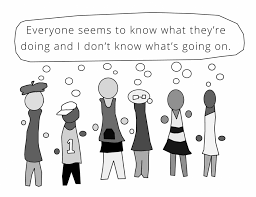
Impostor Syndrome basically means the feeling of not being good enough or competent as others think you are or you really are even if proven that you are qualified and successful. In other words, it it is the feeling of being a fraud and you might get exposed for not being as good as you make others think you are even when you are really successful.
People with impostor syndrome think their achievements are because of luck and not because they qualified for it or deserve it. It is an experience and not a mental disorder. Dr. Pauline R. Clance and Dr. Suzanne A. Imes first introduced the impostor syndrome in 1978 and posed that it affected women only but following their publication in 1978, it was determined that it affected both men and women. She also created an impostor syndrome test.
Impostor experience may be accompanied by stress, anxiety or depression. In fact, many highly successful and smart people have experiences of impostor syndrome.
Types of Impostor Syndrome
Valerie Young in her book: "The Secret Thoughts of Successful Women: Why Capable People Suffer From the Imposter Syndrome and How to Thrive in Spite of It" identified 5 groups of impostor syndrome:
There are some things that can be done to overcome impostor feelings. Clance and Imes proposed a therapeutic approach which includes a group setting where individuals can meet with other people who have this experience. They go on to help participants extract the self- doubt they feel before an event occurs.
Another step is to emphasize the importance of self-worth.
Sharing your feelings with trusted family and friends can also be helpful. Re-framing one's thoughts and ideas are also helpful in overcoming impostor syndrome. Having mentors to guide an individual in different stages of life will minimize the feelings of self- doubt.
In conclusion, most people experience doubts or feelings of inadequacies with themselves and according to Dr. Young "...The important part is not to let that doubt control your actions, says Young. “The goal is not to never feel like an impostor. The goal for me is to give [people] the tools and the insight and information to talk themselves down faster,” she says. “They can still have an impostor moment, but not an impostor life.”
You can look up more resources by Valerie Young and TED talks on overcoming impostor syndrome.
You are loved💙
What is Impostor Syndrome?
Impostor Syndrome basically means the feeling of not being good enough or competent as others think you are or you really are even if proven that you are qualified and successful. In other words, it it is the feeling of being a fraud and you might get exposed for not being as good as you make others think you are even when you are really successful.
People with impostor syndrome think their achievements are because of luck and not because they qualified for it or deserve it. It is an experience and not a mental disorder. Dr. Pauline R. Clance and Dr. Suzanne A. Imes first introduced the impostor syndrome in 1978 and posed that it affected women only but following their publication in 1978, it was determined that it affected both men and women. She also created an impostor syndrome test.
Impostor experience may be accompanied by stress, anxiety or depression. In fact, many highly successful and smart people have experiences of impostor syndrome.
Types of Impostor Syndrome
Valerie Young in her book: "The Secret Thoughts of Successful Women: Why Capable People Suffer From the Imposter Syndrome and How to Thrive in Spite of It" identified 5 groups of impostor syndrome:
- The perfectionist: A perfectionist would mostly set high targets and goals for them to achieve and when they are unable to fulfill all their set goals, they start to doubt their own abilities. Some perfectionists find it difficult to delegate tasks and accuse themselves of not being enough when they cannot meet a high mark.
- The superwoman/man: Individuals who experience this phenomenon may have a desire for a super hero status. They push themselves to measure up to what they think others perceive of them. Their workaholic nature is used to cover up their insecurities of been found out as a fraud.
- The natural genius: The natural genius experiences this phenomenon when they are tasked with gaining extra skills or learning extra beyond their natural capabilities. They begin to doubt their competence when they have to put in extra effort.
- The soloist: The soloist would feel as though asking for help would expose their being a 'fraud' and would rather be independent and resist assistance to prove their worth.
- The expert: Experts rate themselves on the level of what they know and what they can do. They would not want to do some things that would expose them as inexperienced.
There are some things that can be done to overcome impostor feelings. Clance and Imes proposed a therapeutic approach which includes a group setting where individuals can meet with other people who have this experience. They go on to help participants extract the self- doubt they feel before an event occurs.
Another step is to emphasize the importance of self-worth.
Sharing your feelings with trusted family and friends can also be helpful. Re-framing one's thoughts and ideas are also helpful in overcoming impostor syndrome. Having mentors to guide an individual in different stages of life will minimize the feelings of self- doubt.
In conclusion, most people experience doubts or feelings of inadequacies with themselves and according to Dr. Young "...The important part is not to let that doubt control your actions, says Young. “The goal is not to never feel like an impostor. The goal for me is to give [people] the tools and the insight and information to talk themselves down faster,” she says. “They can still have an impostor moment, but not an impostor life.”
You can look up more resources by Valerie Young and TED talks on overcoming impostor syndrome.
You are loved💙
Subscribe to:
Posts (Atom)